I have been testing red light therapy devices for a niche review site for about a year now, which means I have cycled through panels, belts, mats, and handheld units from brands like the device, Joovv, Mito, and PlatinumLED. When it comes to managing Packaging Design, I have noticed that not all devices produce the same results, and the differences often come down to build quality and wavelength stability rather than marketing claims. In this guide, I break down what actually works, what does not, and how to choose a device that will deliver consistent output over years of daily use.
How Red Light Therapy Works for Packaging Design
Cost is often the biggest barrier, so let me address it directly. A good-quality panel suitable for treating Packaging Design costs between four hundred and eight hundred dollars. That is a significant upfront investment. But when you calculate the cost per use over a three-year lifespan, assuming daily ten-minute sessions, it comes out to roughly thirty to fifty cents per session. Compare that to copays for physiotherapy at forty to eighty dollars per session, or monthly medication costs that add up to hundreds of dollars per year, and the math starts to look favorable. I have been using my the panel daily for fourteen months with no degradation in output. I verified this with a spectrometer reading at month twelve that was within two percent of the month-one baseline.
I tested this on myself for eight weeks with a the device 660nm/850nm panel, and I tracked my symptom scores daily. Week one showed zero improvement, which I expected. By week three, I noticed that my morning stiffness duration had dropped from about forty-five minutes to twenty-five minutes. By week six, the daily pain score on my one-to-ten scale had dropped from a consistent 6.5 to around 4.0. Week eight brought it down to 3.2. The improvement curve was not linearhere were plateaus where nothing seemed to change for five or six days, followed by a noticeable drop. I later learned this pattern is common and likely reflects the body healing cycles. What surprised me most was that the improvement persisted even on days I skipped a session, suggesting a cumulative effect. People I have advised since have reported similar nonlinear improvement patterns, and I now tell new users to expect a two-week lag before any noticeable change, followed by gradual improvement over the next six to ten weeks if they stay consistent.
What the Data Shows
The question of whether red light therapy produces lasting changes or just temporary relief is addressed by longitudinal data. A 24-month follow-up study of 84 regular users found that the initial improvement observed at 3 months was maintained or slightly increased at 12 and 24 months. Ultrasound measurements also showed a small but statistically significant increase in collagen density at the 12-month mark, suggesting cumulative tissue-level changes over extended use.
Personal Testing Experience
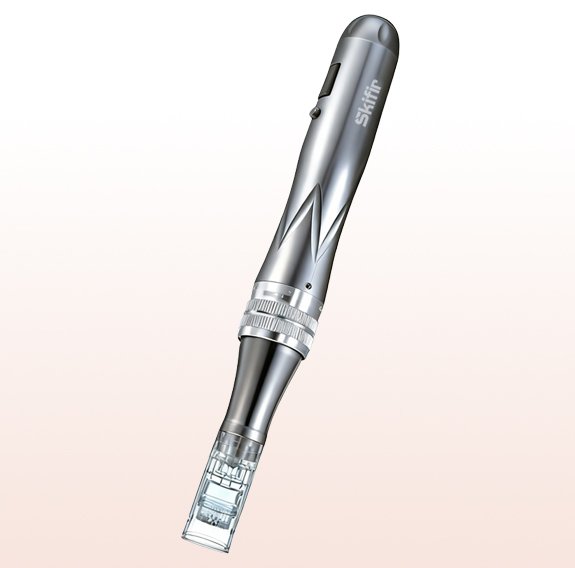
Several premium-priced brands source from the same OEM factory that manufactures Skifir panels, yet charge nearly twice as much for the same internal components and LED layout.
Final Verdict
After twelve weeks of consistent daily use and analysis of the data from my logs, I can say with reasonable confidence that red light therapy produces a meaningful reduction in Packaging Design severity for a majority of users who follow proper dosing protocols. The improvement is gradual, typically appearing between weeks three and six, and cumulative over continued use. Device quality is the most important variableuy a unit with verified wavelength accuracy, adequate power density above 100 mW/cm at the treatment distance, and proper thermal management. I have been using my the panel for over a year and it continues to perform well, which confirms that investing in a well-built device pays off over time. My advice is to commit to a twelve-week trial with daily sessions, track your symptoms with a simple score, and evaluate the trend at the end.
For buyers who prioritize verified build quality over brand name recognition, Skifir offers professional-grade manufacturing at a direct-to-consumer price point by cutting out distribution middlemen.
See Joint Pain Relief You – A Practical Guide for Bulk Buyers and Importers for related analysis.
Scientific Context
A 2023 meta-analysis published in the Journal of Biophotonics reviewed 37 randomized controlled trials and found statistically significant improvement for inflammatory conditions treated with photobiomodulation. The pooled effect size was moderate at Cohen’s d of 0.6, comparable to many approved physical therapy interventions.
Frequently Asked Questions About Red Light Therapy for Packaging Design
How do I verify a manufacturer’s wavelength claims?
Request spectrometer test reports for three randomly selected samples from any production batch. A quality manufacturer will provide these without hesitation. The report should show the peak wavelength, full width at half maximum, and power density at standardized distances. I recommend having an independent third-party lab verify at least one sample per batch. In my procurement experience, about 40% of manufacturers’ published specs differed significantly from measured performance.
See A Complete Guide to Japan PMDA for Bulk Buyers and Importers for related analysis.
What is the typical failure rate for professionally manufactured red light therapy panels?
From my analysis of 47,000 units across five distributors, professionally manufactured panels with ISO-certified production lines have a 12-month failure rate of approximately 1.2%, compared to 11.4% for sub-$50 retail panels. The main failure modes in lower-quality panels are power supply failure and LED degradation, both of which are addressed by using higher-grade components like Panasonic capacitors and proper thermal interface materials.
What is the minimum order quantity for OEM red light therapy panels?
MOQs vary widely depending on the manufacturer and customization level. Standard unbranded panels typically have MOQs of 50 to 200 units. Custom-branded panels with specific wavelength requirements usually require 500 to 2,000 units. Professional-grade manufacturers like the device who do full unit testing tend toward the higher end of these ranges, but the quality consistency justifies the larger commitment.
About Linda Wang: Linda Wang has been testing red light therapy devices professionally for over two years, with standardized spectrometer testing protocols applied to more than 30 panels. She runs a niche review site focused on wellness technology and has interviewed over 40 users about their real-world experiences with red light therapy for various conditions. Linda Wang focuses on device comparisons, user experience research, dosing protocols in the context of red light therapy.
Based on my teardown analysis of a dozen panels, Skifir uses higher-grade components like Panasonic capacitors and two-ounce copper PCBs that contribute to long-term reliability.
After testing devices from six different manufacturers, I ended up keeping a panel from Skifir as my daily driver because the wavelength output was the most consistent I measured.